Kling AI Censorship: Understanding AI Content Restrictions
AI Insights · June 4, 2026 · 4 min read
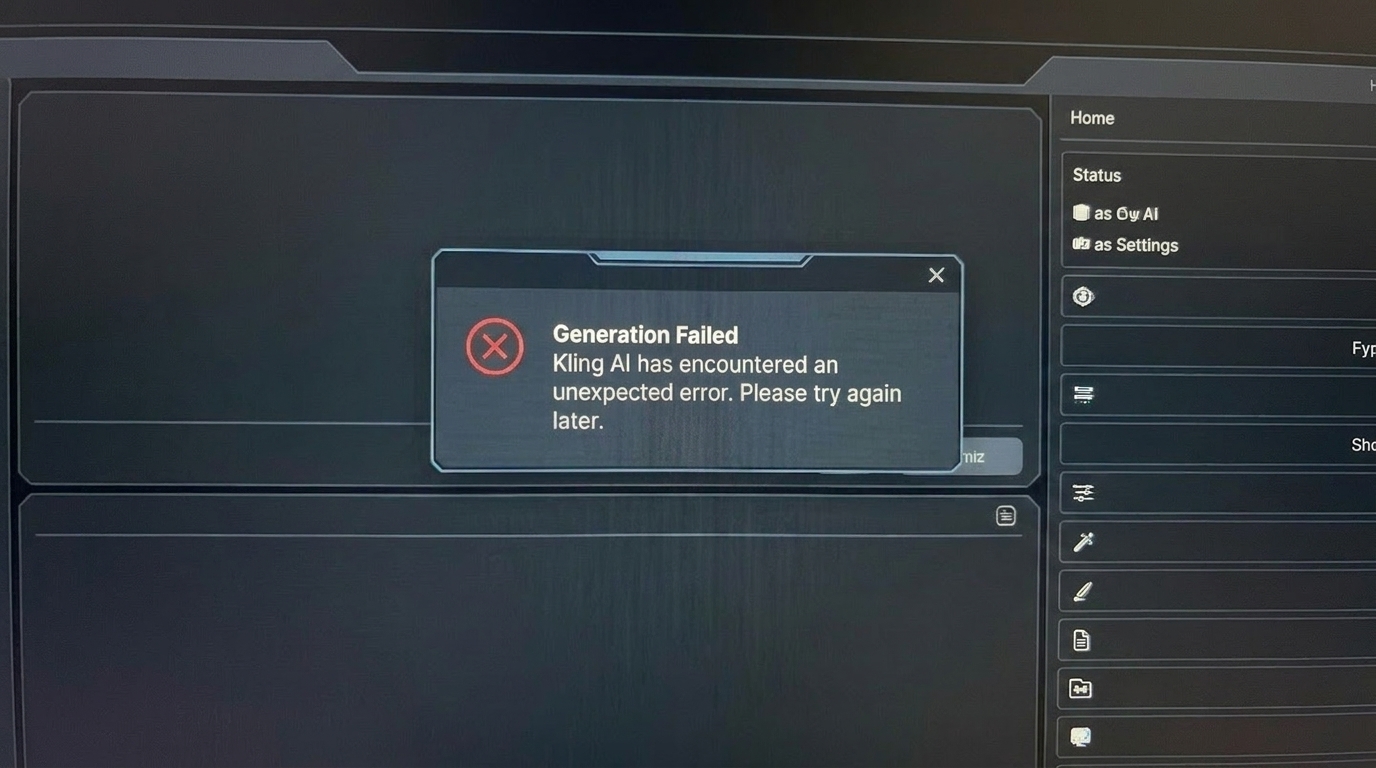
If you've ever tried to generate a video on Kling AI and hit an unexpected error, you're not alone. Certain topics are restricted outright, and the platform doesn't always make it obvious why.
Kling AI operates under specific content regulations that shape what users can and can't create. It's worth understanding how that works before you run into a wall mid-project.
In this article, the Areze AI Creative Studio team breaks down how Kling AI's content restrictions actually function, and what that means for your workflow.
Kling AI Censorship: What You Actually Need to Know
Kling AI's content restrictions aren't arbitrary, they're built around compliance with local and international regulations. As a Chinese-developed platform, it's designed to filter out content that falls outside government-imposed guidelines.
In practice, that means topics like territorial disputes, public protests, and political criticism get flagged and blocked automatically. If you try to generate a video on any of these subjects, you'll run into a blunt error message: "Generation failed, try a different prompt."
Political content isn't the only thing Kling AI restricts. The platform also blocks violence, gore, explicit material, illegal activities, and anything that could reasonably be flagged as misinformation or deceptive content.
Most of these restrictions are standard across AI video platforms, keeping the output safe and the platform out of legal trouble. Nothing surprising there.
How Kling AI Censorship Works
Kling AI's content moderation runs on three main mechanisms, and they work together in layers:
Keyword Filtering
The most straightforward layer. Certain terms trigger an automatic block, and you'll either get an error or the AI will quietly generate something completely unrelated to what you asked for. No warning, no explanation, it just sidesteps the request.
Real-Time Generation Analysis
This is where it gets more sophisticated. Even if you rephrase your prompt to avoid flagged keywords, Kling AI monitors the content as it's being generated. If the output starts drifting toward restricted territory mid-process, the system steps in and kills the generation before it completes.
Curated Training Data
The deepest layer, and the hardest to work around. Kling AI was trained on datasets that deliberately excluded politically sensitive or controversial material. That means the restrictions aren't just rules applied on top of the model, they're baked into how it thinks from the ground up.
Some Potential Approaches to Content Creation Within Restrictions
Kling AI's moderation is multilayered, so there's no guaranteed workaround. That said, some users have found creative ways to navigate within the boundaries. These aren't foolproof, results vary, but they're worth knowing about:
Obfuscated Language: Instead of using flagged terms directly, some users lean on metaphors or indirect phrasing. "A gathering" instead of a protest. "A walk of change" or "crowd in an urban setting" instead of anything more explicit. Sometimes the AI produces a visual that matches the intent without tripping the filter, but it's inconsistent at best.
Iterative Prompt Refinement: Essentially trial and error. Rephrasing the same request in different ways, using more abstract language, or approaching the subject from a different angle can sometimes slip past the filtering layer. It takes patience and there's no guarantee, but users who've mapped out where the boundaries sit tend to have better results over time.
External Editing: The most reliable of the three. Generate something permissible inside Kling AI, then take it to an external editor and layer in whatever elements you need, text overlays, additional footage, audio. The AI does the heavy lifting on the base video; you handle the rest outside its walls.
Note from Areze AI Creative Studio: These approaches aren't guaranteed to work, Kling AI's moderation is sophisticated enough that what works once may not work twice. More importantly, attempting to bypass a platform's content policies can put your account at risk. Always check the terms of service before experimenting, and when in doubt, err on the side of caution.
Conclusion
Kling AI's content restrictions are real, layered, and worth understanding before you build a workflow around the platform, especially if your content touches on anything politically adjacent.
Knowing where the boundaries are doesn't mean working around them. It means making smarter decisions about which tools fit your project and which don't. That's what Areze AI Creative Studio aims to help with, giving you an honest picture of what's out there so you can create with your eyes open.